

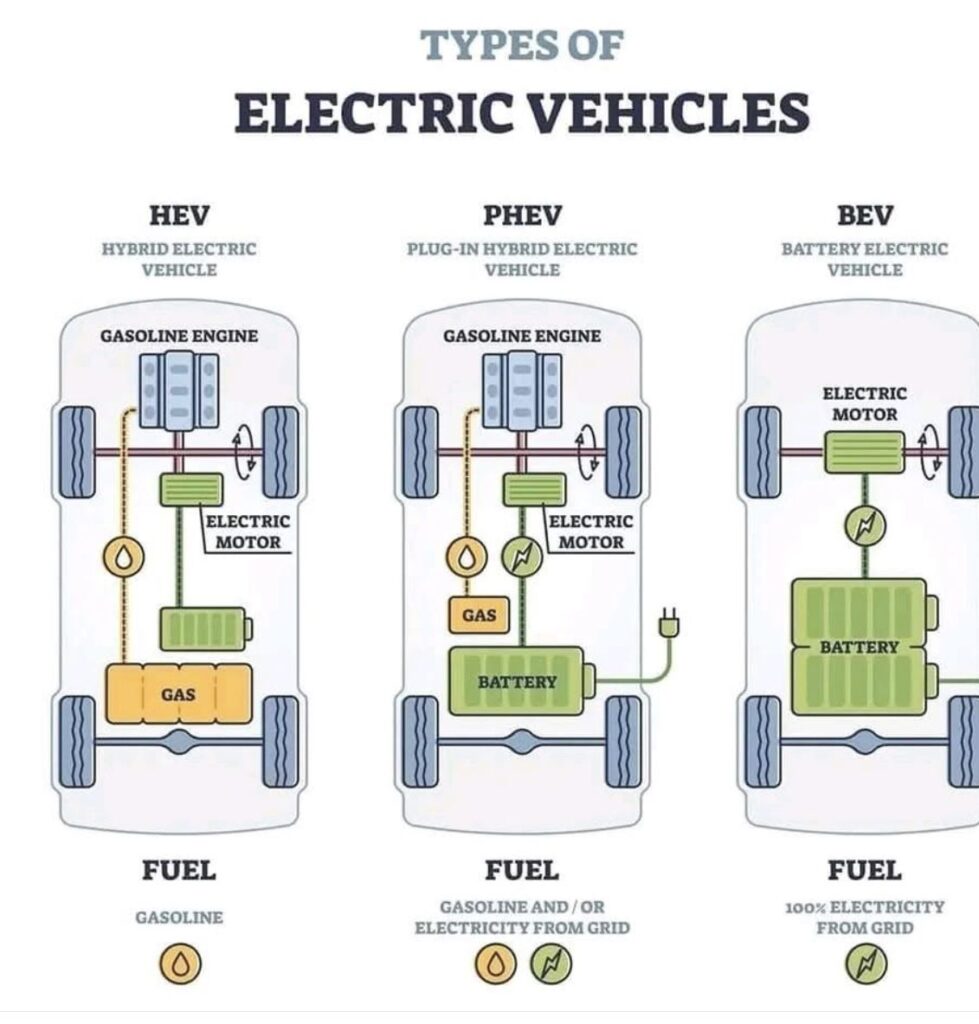
The world is shifting from internal combustion engines to sustainable electric power. This guide, presented by Shree Durga Ji Public School (SDPS), explains the depth of EV technology from the basic concepts for beginners to advanced engineering for future professionals.
Phase 1: The Basics (What is EV?)
For School Students and Beginners
- Definition: An Electric Vehicle (EV) is a vehicle that uses one or more electric motors for propulsion instead of a traditional petrol or diesel engine.
- The Power Source: Unlike regular cars that use fuel tanks, EVs have a large Battery Pack that stores electricity.
- Zero Emissions: Since there is no burning of fuel, there is no smoke from the exhaust. This makes EVs environment-friendly and helps reduce global warming.
- Cost Efficiency: Electricity is much cheaper than petrol. Additionally, EVs have fewer moving parts, which means very low maintenance costs.
Phase 2: Intermediate Concepts (How it Works)
For Tech Enthusiasts
- Electric Motor vs. Engine: While an engine has hundreds of moving parts, an electric motor is simple, quiet, and provides instant “torque” (speed pick-up).
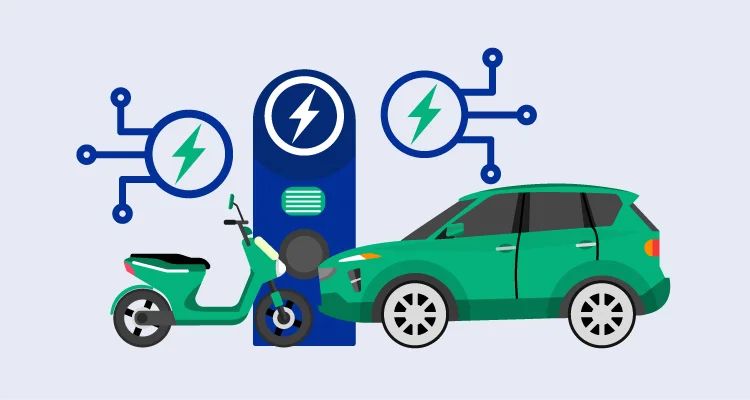
- Regenerative Braking: This is a “magic” feature where the motor runs in reverse when you apply brakes. It acts as a generator and sends electricity back into the battery, increasing the driving range.
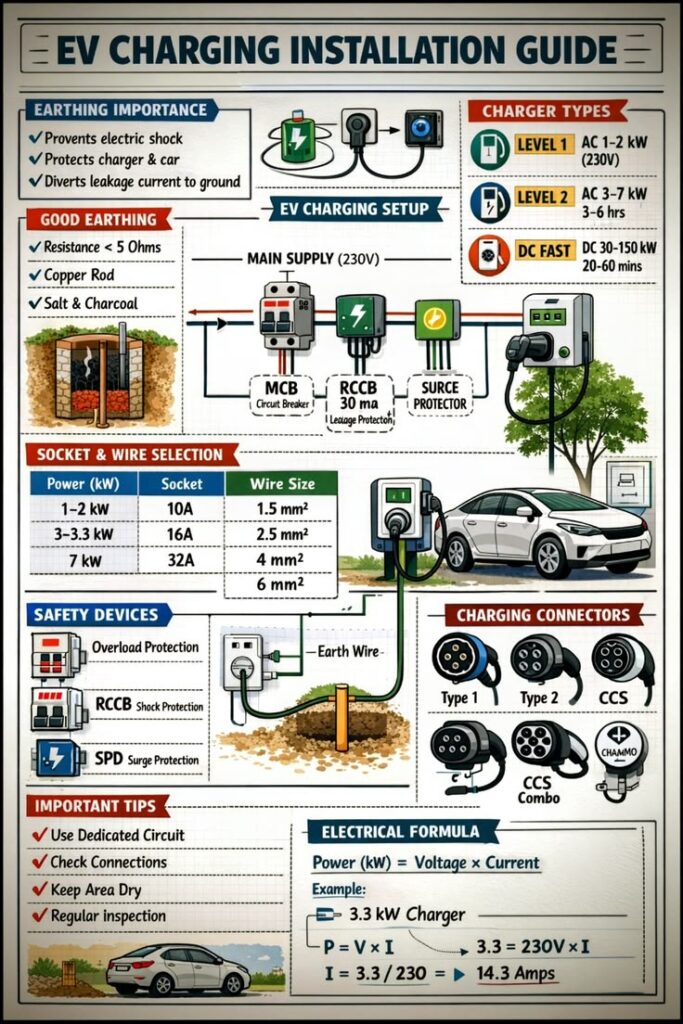
- Charging Types:
- Level 1 (Home Charging): Slow charging using a regular wall socket.
- Level 2 (AC Fast Charging): Found in offices or malls; charges the car in a few hours.
- Level 3 (DC Supercharging): High-speed chargers at highways that can charge 80% of the battery in 30–60 minutes.
Phase 3: Advanced Technical Deep-Dive
For Future Engineers and Professionals
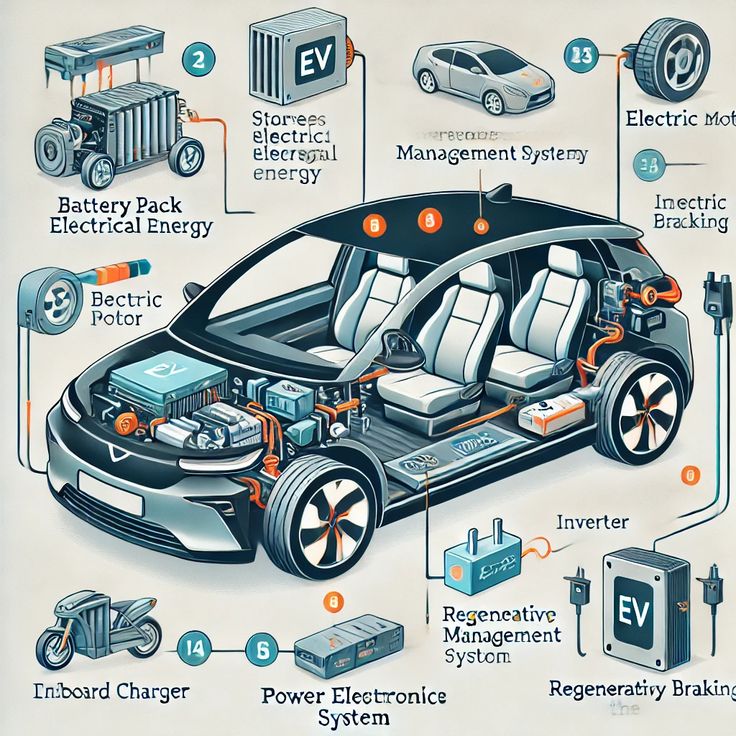
- BMS (Battery Management System): This is the most critical component. It is a computer inside the battery that:
- Monitors the voltage of each cell.
- Controls the temperature to prevent overheating or fire.
- Ensures the battery lasts for many years.
- Inverter & Controller: The battery provides DC (Direct Current) power, but most EV motors need AC (Alternating Current). The Inverter converts this power and the Controller decides how much power to send based on how hard you press the accelerator.
- Battery Chemistry:
- Lithium-Ion (Li-ion): Currently the standard.
- LFP (Lithium Iron Phosphate): Safer and longer-lasting, popular in India.
- Solid-State Batteries: The future technology that will charge in minutes and offer 1000km+ range.
- V2G (Vehicle-to-Grid): A futuristic technology where your car acts as a giant power bank for your house or the city grid during power cuts.
Career Opportunities in EV
The Government of India, through ASDC and Skill India, is promoting various career paths in this sector:
- EV Design Engineer: Designing the look and aerodynamics of the car.
- Battery Technician: Specializing in repair and maintenance of high-voltage batteries.
- Charging Infrastructure Manager: Setting up and managing charging stations across the country.
- Software Developer: Writing code for the BMS and smart features of the car.
How to Start Learning?
If you are interested in EV Mobility, explore these official government portals:
- ASDC India: asdc.org.in
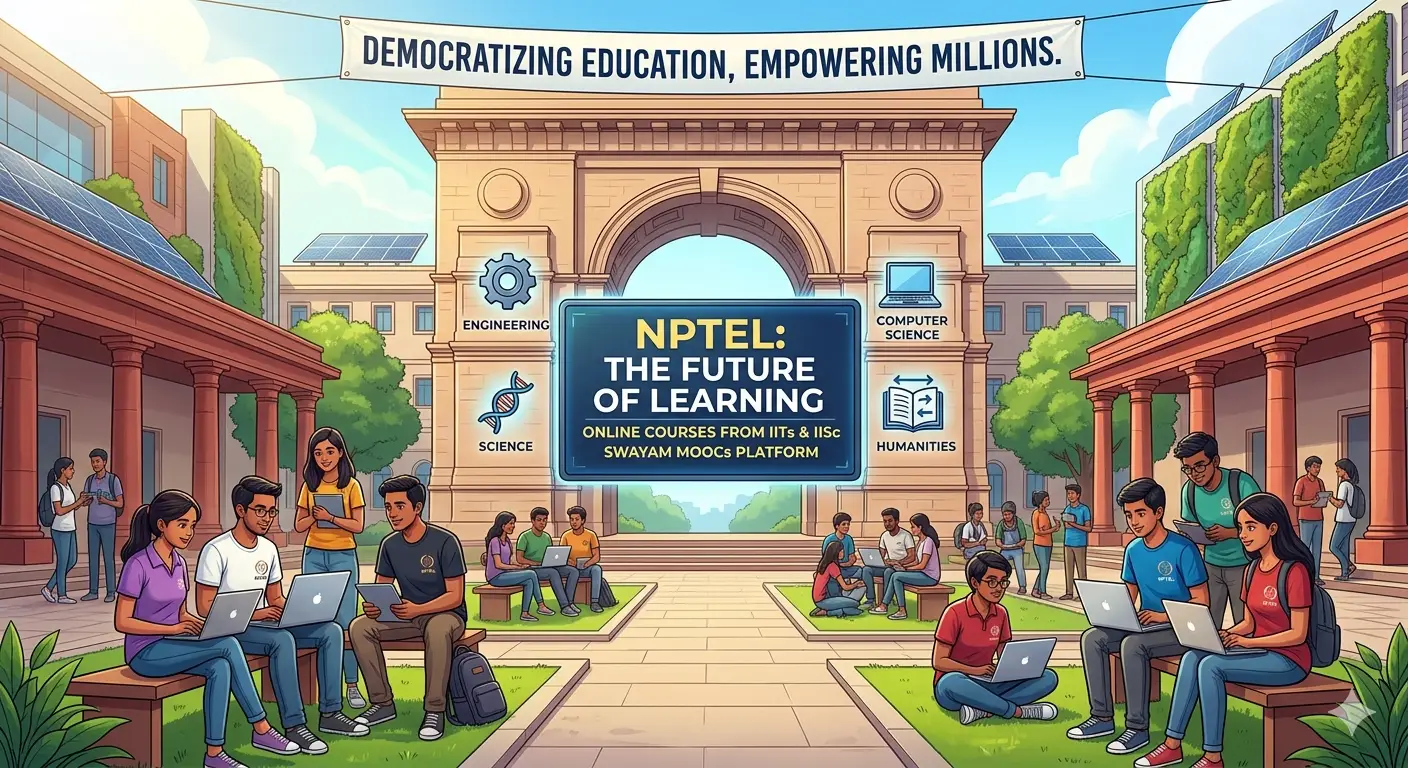
- Swayam/NPTEL: Search for “Electric Vehicles” or “Battery Management” courses.
- Skill India Digital: For vocational training in EV mechanics.
SDP School Note: We encourage our students to look beyond traditional mechanics and prepare for the EV revolution. The future of India is electric!
“Drive the change. Be the future.”





Leave a Reply