

A Comprehensive Historical Analysis Prepared for the Academic Community of Shree Durgaji Public School
While every Indian recognizes January 26th as Republic Day a day of parades and patriotism the date carries a deep historical weight that predates 1950. The selection of this specific day was a deliberate act of historical preservation, linking the achievement of the Republic to the earliest sparks of the independence movement.
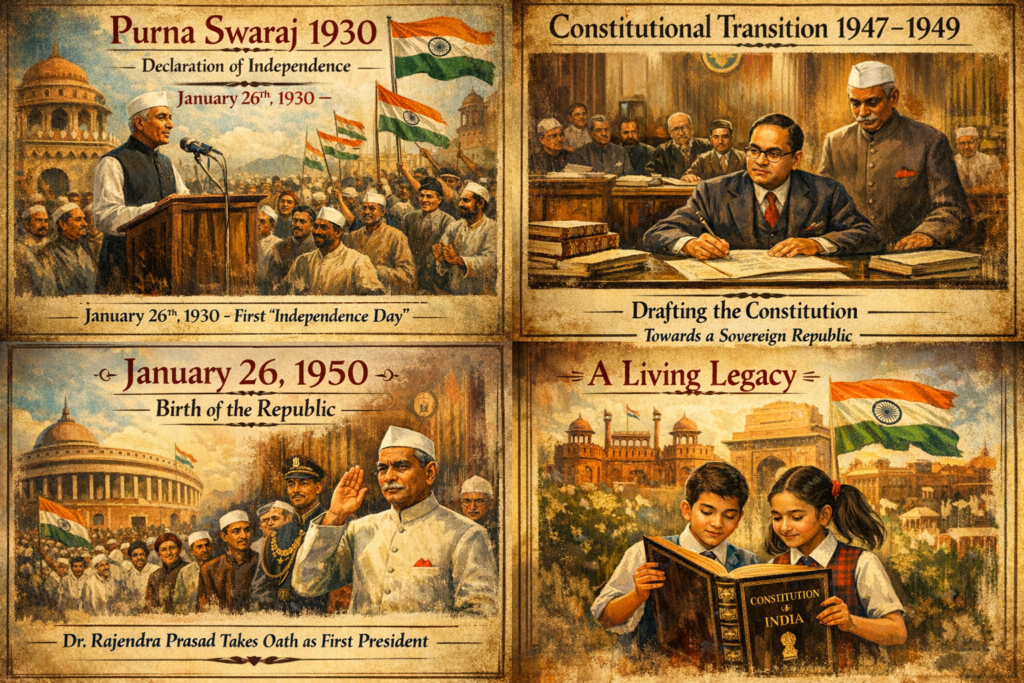
1. The Seed of Sovereignty: Purna Swaraj (1930)
The story begins two decades before India became a Republic. In December 1929, during the Lahore session of the Indian National Congress, Pandit Jawaharlal Nehru was elected President. On the banks of the Ravi River, the Congress passed a historic resolution: Purna Swaraj (Complete Independence).
Up until that point, political discussions had centered around “Dominion Status.” However, the leaders decided that nothing short of total freedom would suffice. They declared that January 26, 1930, would be observed as “Independence Day” across India. For the next 17 years, until 1947, Indians celebrated January 26th as the day of their symbolic independence, hoisting the tricolor and taking a pledge of resistance.
2. The Constitutional Transition (1947–1949)
When India finally gained freedom on August 15, 1947, it was an occasion of great joy, but the country was still governed by the modified Government of India Act of 1935. India was a constitutional monarchy with King George VI as the nominal Head of State, represented by a Governor-General.
To become a truly sovereign nation, India needed its own set of laws. The Constituent Assembly, chaired by Dr. Rajendra Prasad and led by the visionary drafting committee head, Dr. B.R. Ambedkar, spent nearly three years (2 years, 11 months, and 18 days) meticulously crafting the Constitution.
3. Why January 26?
The Constitution of India was actually completed and adopted on November 26, 1949 (now celebrated as Constitution Day). However, the leadership decided to wait two more months to bring it into legal force.
They chose January 26, 1950, specifically to honor the 20th anniversary of the Purna Swaraj declaration of 1930. By doing so, they ensured that the date which ignited the flame of total independence would forever be etched in the heart of the Indian Republic.
4. 1950: The Transformation
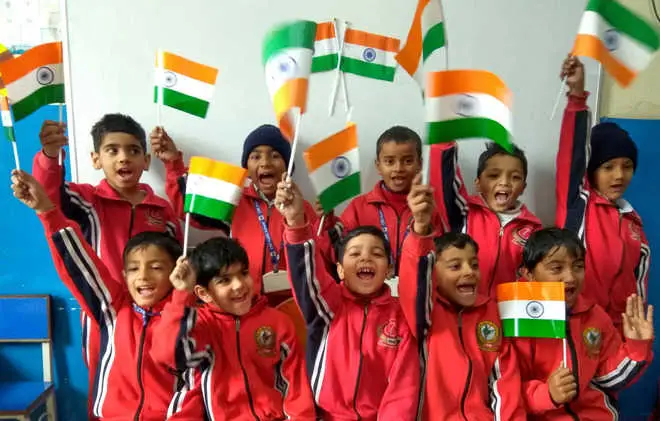
On the morning of January 26, 1950, at 10:18 AM, India was declared a Sovereign Democratic Republic. Minutes later, Dr. Rajendra Prasad took the oath as the first President of India at the Durbar Hall of Government House. This moment effectively ended the British monarch’s role as the head of state and replaced it with a President elected by the people.
Conclusion: A Living Legacy
For the students of Shree Durgaji Public School, understanding this history is vital. January 26th is not just a holiday; it is the bridge between our struggle for freedom and our commitment to the rule of law. It reminds us that our Republic was not granted to us it was built through decades of intellectual debate, political courage, and an unwavering belief in equality and justice for all.
“The Constitution is not a mere lawyers’ document, it is a vehicle of Life, and its spirit is always the spirit of Age.”
Dr. B.R. Ambedkar





Leave a Reply